• Story
  • Rural Noir
  • Institutional Failure
  • Serial Case

The Third Body

You drove all three of them. You are the only one holding both photographs.

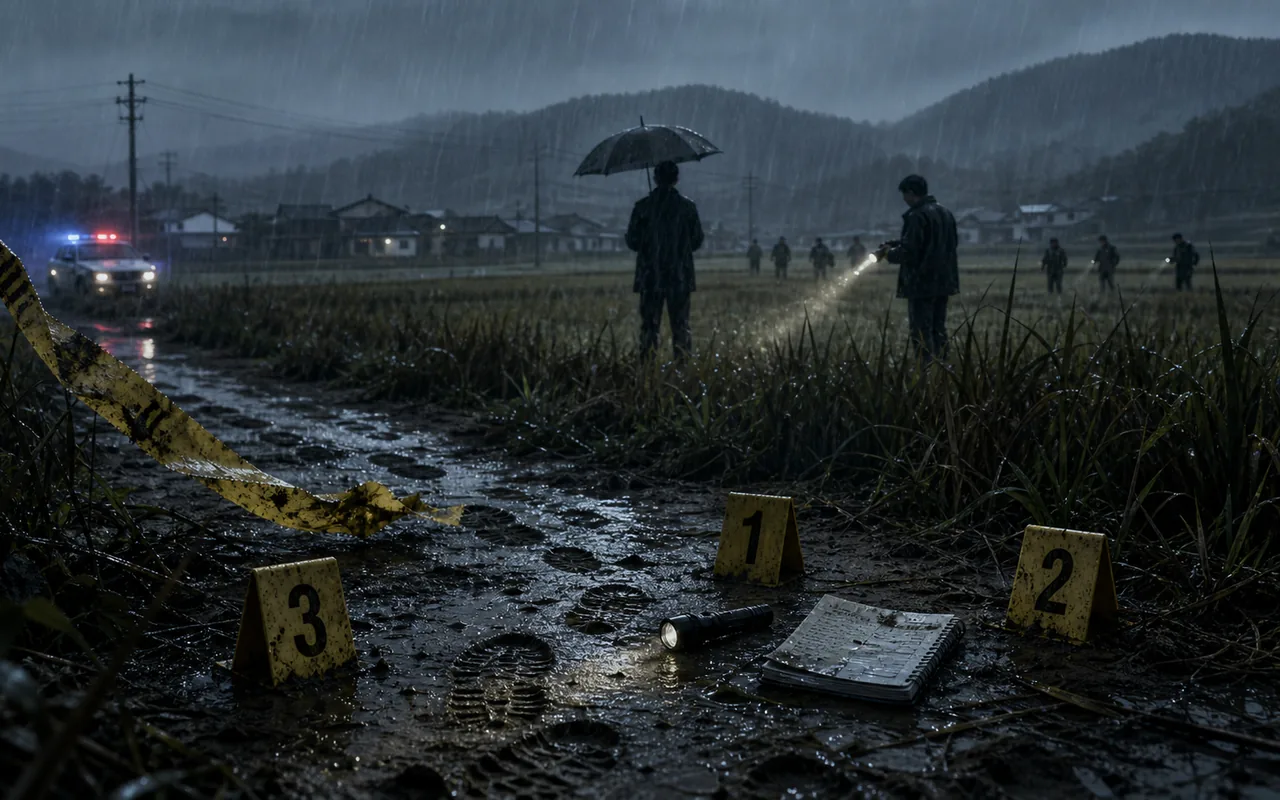
Sedge County, the fall of 1979: thirty miles of drained marsh held down by pumps and ditches, and it has rained since Tuesday. In September a girl came out of the Bly lateral and was ruled a drowning. In November another was found at the fence line of the Kesler field and ruled exposure. This morning there is a third woman sixty yards from the second, and you are the one backing the county car up the field road, because the only ambulance in Sedge County is a hearse and you drive it. You have no badge and no authority over anybody. You have a camera, a tape measure, casting plaster, and eleven exposures left. Out here the rain takes a scene in hours, so whatever you photograph, cast, bag or write down before it goes is the only version that will ever exist. Everyone who tells you the truth does it because of what you did for their dead. Nobody here is protecting the killer. They are protecting the last thing they signed.

PlayAI credits

How to play

  1. You open at first light on the fourth day of the rain, kneeling in the mud at the edge of a beet field over the third woman in four months, with eleven exposures left on the roll and a deputy holding the far corner of the sheet — and the first move is whatever you type.
  2. After that you write freely every turn: a line you say out loud, something you do, or a whole paragraph of your own narration; three suggestions sit under each turn for when you would rather not start from nothing.
  3. When a scene has gone as far as it can, hit Advance the story and it jumps forward; chapters fill, close and file themselves, and the next one opens on a county that kept working while you were deciding.

What makes it different

There is no evidence system and nothing here to defeat. The county records only what it has agreed to record: a ruling is filed with the state, a submission reaches the lab only if the sheriff signs it in, an inquest happens only if the coroner calls one. So what you know is worth nothing until it exists in a form somebody else consented to, and half of what stops you is decent people with a reason they can defend at a kitchen table.

Two things you build are actually kept. What you preserve before the rain takes it — a photograph, a cast, a coat in a bag, a name written down — comes back later and does real work, and what you left behind is visibly gone the next time you look. And trust is an account with a balance: people tell you things because of what you did for their dead, and they will name the thing. Anything you bring in, Sedge County treats as though it was always here.

Frequently asked questions

Do I need to pay to play The Third Body?
You get 100 free credits when you sign up, and credits never expire. The game spends credits only when it generates new AI content, based on actual usage — there's no fixed per-round fee and no subscription required to start.
What kind of game is this?
An open-ended novel you write with an AI. You play the assistant at the county funeral home in 1979, you type in your own words, and the AI writes Sedge County back at you in real time — no multiple choice, no dice, no stats.
What can I type?
Anything: a line of dialogue, an action, or a whole paragraph of prose. Each message has two destinations — Continue story puts it into the book as written, while Direct the AI passes a private note to the storyteller about where you want this to go. Three suggested openings sit under every turn if you would rather pick than write.
Does the story ever end? How long can I play?
There is no ending, no arrest that closes it, and no final confrontation. Chapters fill up, close and file themselves, and the next one opens on a county that kept going — so it runs as long as you keep writing, and you can leave it for weeks and pick it up where you left off.
Do I need other players?
No. It is single-player; the AI plays everyone else in Sedge County.
Is anything I write kept?
Yes. The story saves as it goes and archives chapter by chapter, so you can open the directory and reread any of it. What you actually preserved goes on working later, and what you left in the rain is gone when you go back for it.
Is there a Chinese version?
Yes — Simplified Chinese and English, each written for its own readers rather than translated line for line.